
How to Choose a Neodymium Magnet Grade: N35, N42, N52 and Temperature Suffixes
How to Choose a Neodymium Magnet Grade
N35, N42 and N52 are among the best-known names in the neodymium magnet market. They are useful starting points, but a grade is only one part of a working magnet specification. The correct choice depends on what the magnet must do inside the finished product, not simply on selecting the highest number available.
This guide explains how grade names fit into an application-led selection process. It is intended for sourcing and design discussions; final performance should be confirmed against the actual geometry, magnetic circuit, operating environment and validation method.
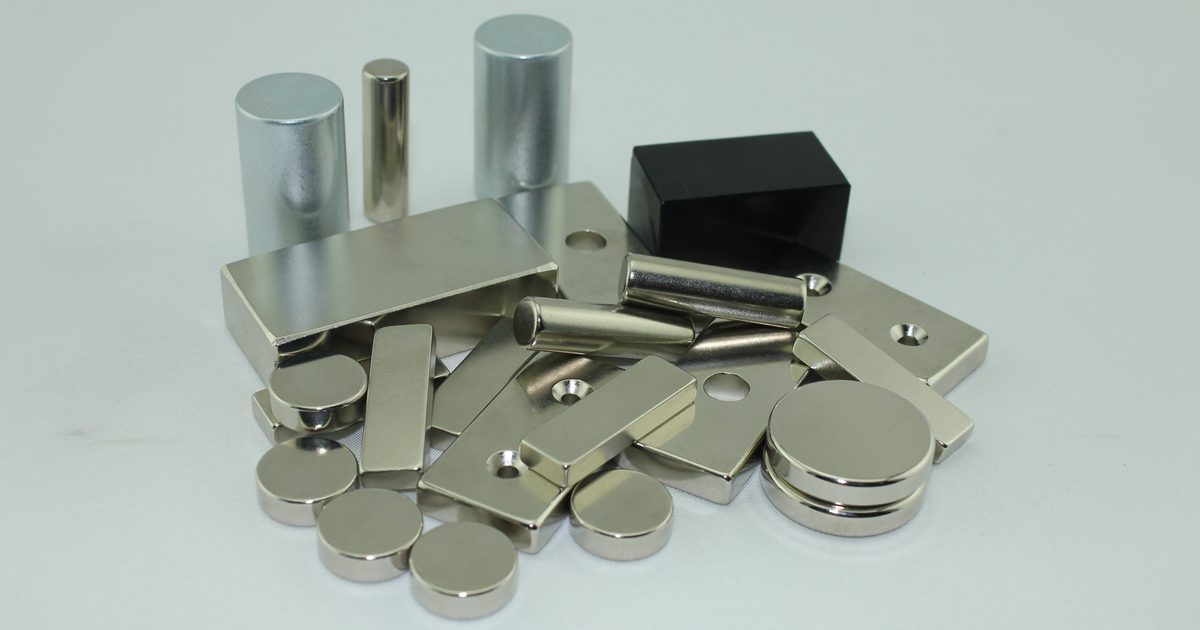
A range of neodymium magnet shapes. Grade selection comes after the application, space and environment are understood.
What the N number tells you
The number in a common grade name such as N35, N42 or N52 refers to a material performance classification. In broad terms, a higher number indicates a higher maximum energy-product range for the magnetic material. It does not directly state the pull force of a finished part, because pull force changes with the magnet's dimensions, contact area, air gap, steel target and test method.
That distinction matters in procurement. Two magnets with the same grade can perform very differently when one is a thin disc and the other is a long block, or when the mating steel, working gap and mounting arrangement change.
A simple comparison: N35, N42 and N52
CMS FIELD | PUBLISH-READY CONTENT |
Grade family | How to use it in early selection |
N35 | A practical starting point when the design has sufficient volume and does not need the most compact possible magnet. |
N42 | A commonly considered middle-to-higher option when the design needs more magnetic output within similar space. |
N52 | A high-output option for compact designs, subject to application, temperature, handling and cost review. |
Temperature suffixes | Suffixes such as M, H, SH, UH or EH indicate a separate temperature-performance family; confirm the exact requirement with the supplier. |
Why the highest grade is not always the best choice
Choosing the top listed grade without checking the rest of the design can add cost without delivering the expected system benefit. If the magnetic circuit is limited by a large air gap, a thin steel target, saturation in the steel path or a non-magnetic mounting detail, changing grade alone may have less effect than changing geometry or the surrounding components.
A balanced specification matches the grade to the required holding, sensing, coupling or motion task. It also leaves room for practical needs such as available size, assembly method, handling safety, coating choice and production tolerance.
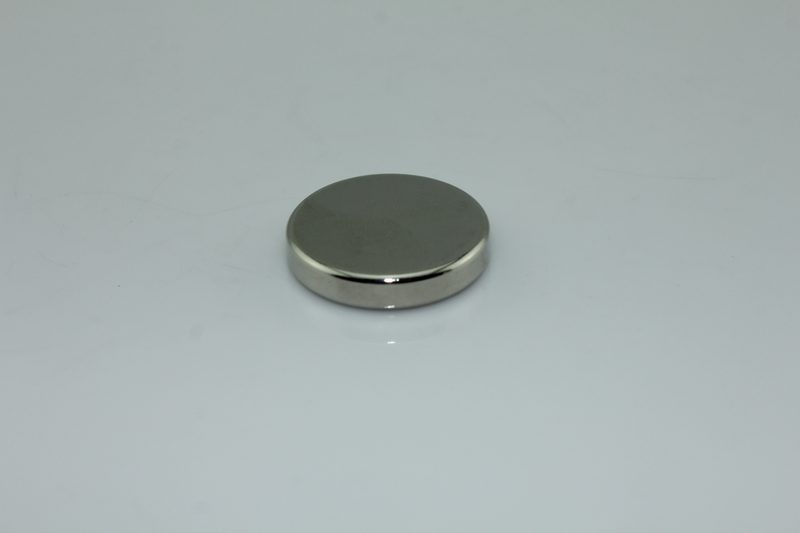
Disc magnets are often space-efficient, but their finished performance still depends on thickness, mating steel and the working gap.
Temperature deserves its own line in the RFQ
Temperature can affect a magnet's usable performance and long-term stability. A standard grade name by itself is not enough to define a warm operating environment. State the expected operating-temperature range, temperature exposure pattern, proximity to heat sources and any required margin in the RFQ or drawing notes.
If the application needs a high-temperature material family, ask the supplier to identify the suitable suffix and confirm it against the actual part size and magnetization. Avoid treating a suffix as a universal temperature guarantee: the finished design and test conditions still matter.
Five questions to answer before selecting a grade
· What function is required: holding, sensing, coupling, separation, positioning or another task?
· What are the magnet dimensions, available space and magnetization direction?
· What steel target, air gap or magnetic circuit surrounds the magnet in the finished assembly?
· What operating temperature, humidity, fluid exposure or corrosion risk will the part experience?
· What performance method will be used for approval: pull force, flux measurement, assembly test or another agreed criterion?
Do not choose grade separately from coating and geometry
Neodymium magnets are usually supplied with a protective coating selected for the intended environment and assembly process. The coating, edge treatment, size tolerance and handling method belong in the same conversation as the grade. A very strong but poorly protected or poorly fitted magnet may not be the right production part.
Geometry also changes the practical result. A ring magnet, cylinder, disc, block or countersunk shape offers different working surfaces and assembly options. Ask for a review of the complete part drawing rather than sending only a grade name.
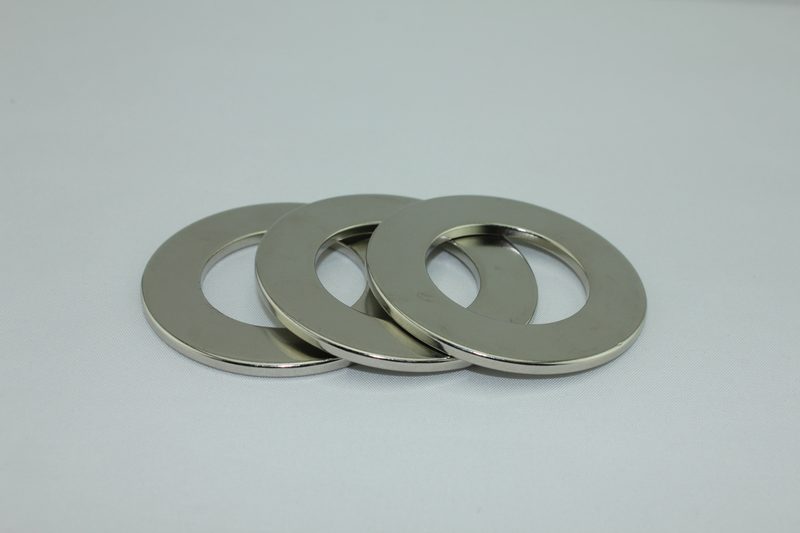
Ring magnets illustrate why shape, working surface and mounting method must be considered together with material grade.
A clear RFQ avoids expensive re-selection
For a custom magnet RFQ, include the shape and dimensions, requested grade or target performance, magnetization direction, coating, quantity, temperature conditions and inspection needs. If the grade is not fixed, explain the function and constraints so the supplier can propose a balanced option rather than simply quoting the highest number.
For critical applications, agree on a representative test condition. A pull-force result without a defined steel target, contact condition and separation direction can be misleading. The same principle applies to flux readings: record the measurement location and fixture so the result can be compared consistently.
Selection checklist
CMS FIELD | PUBLISH-READY CONTENT |
Requirement | What to include in the inquiry |
Magnet function | The job the magnet performs and the system-level performance target. |
Geometry | Drawing or dimensions, tolerances, available space and mounting details. |
Magnetic details | Requested grade or performance target, magnetization direction, target steel and working gap. |
Environment | Operating-temperature range, corrosion exposure, cleaning media and handling risks. |
Validation | Agreed sample checks and the test fixture or measurement method for approval. |
Choose for the application, not the label
Neodymium magnet grades provide a useful shorthand, but the most reliable selection comes from viewing grade as one decision within the complete assembly. Start with the application target, confirm the surrounding magnetic circuit and environment, then select the grade, geometry, coating and test method together. This approach helps control cost while giving the finished product a clearer path to repeatable performance.