
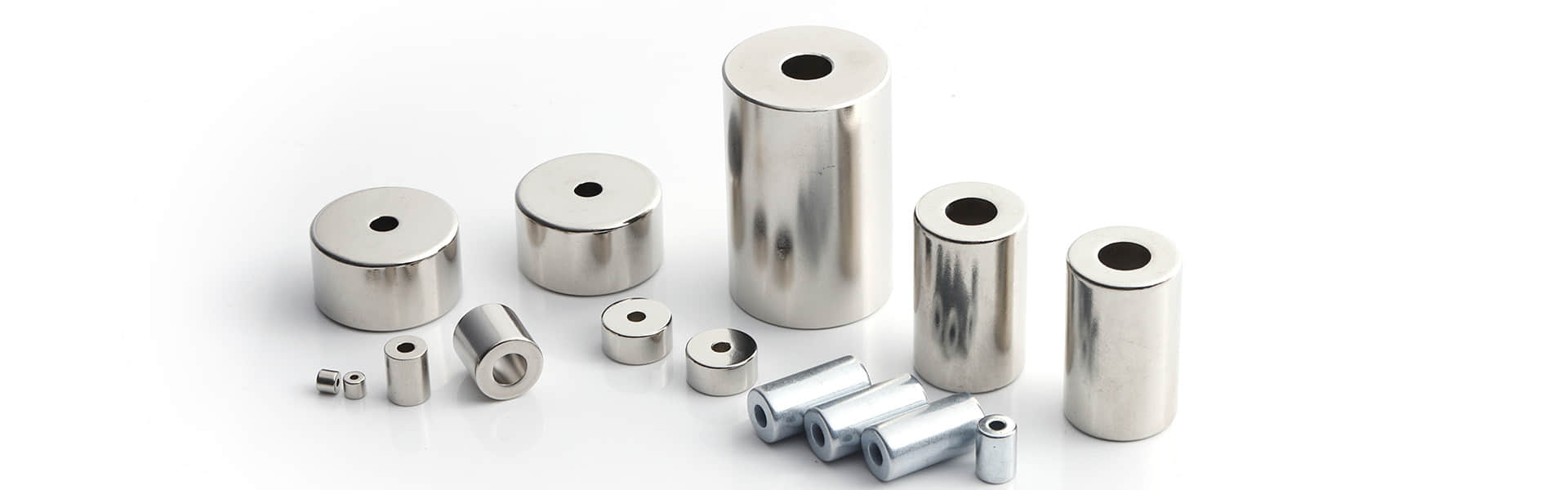
Neodymium Magnets in Aerospace Engineering: Satellites, Spacecraft, and Magnetic Bearings
Introduction
Space is the ultimate engineering challenge. Temperatures swing from -270°C in shadow to over 100°C in direct sunlight. Every gram of weight costs thousands of dollars to launch. Equipment must operate flawlessly for years without maintenance.
Neodymium magnets have emerged as critical components in next-generation spacecraft technologies due to their exceptional magnetic field strength-to-weight ratio. They enable:
Precise satellite attitude control – keeping spacecraft pointed in the right direction
Magnetic levitation bearings – frictionless, maintenance-free rotation
Efficient propulsion systems – lightweight and reliable
Compact, lightweight actuators – reducing launch costs
This guide covers neodymium magnet applications in aerospace engineering, including performance requirements, design considerations, and the extreme conditions they must survive.
Part 1: The Aerospace Environment – Extreme Conditions
Space is one of the most demanding environments for any material.
| Challenge | Impact on Magnets | Mitigation |
|---|---|---|
| Temperature extremes | NdFeB loses strength at high temperatures; degrades at cryogenic temps | Special grades, thermal management |
| Vacuum | Outgassing of coatings | Space-qualified coatings |
| Radiation | Potential demagnetization | Radiation-hardened designs |
| Vibration/launch loads | Mechanical stress | Robust mounting, shock absorption |
| Weight constraints | Need high strength-to-weight ratio | Use high-grade NdFeB |
The temperature challenge: Nd-Fe-B permanent magnets, which have the strongest room-temperature magnetic properties, are unsuitable for extreme temperature applications because of their degraded performance at both elevated and cryogenic temperatures. This is why aerospace applications often specify special grades with enhanced temperature stability.
The forward-looking technical objectives for neodymium magnets in space-constrained applications focus on achieving magnetic density increases of 15-20% within the next five years while simultaneously improving temperature stability to function reliably at operating temperatures up to 200°C without significant demagnetization.
Part 2: Satellite Attitude Control Systems
2.1 Why Attitude Control Matters
A satellite in orbit must maintain precise orientation:
Communications satellites – antennas must point at Earth
Earth observation – cameras must target specific locations
Scientific satellites – instruments must point at celestial objects
Solar panels – must track the sun for power
If a satellite loses attitude control, it can drift, lose communication, or become unusable.
2.2 Magnetic Torquers
Magnetic torquers are devices that use electromagnets (often with neodymium cores) to interact with Earth's magnetic field, generating torque to adjust satellite orientation.
| Component | Function | Magnet Role |
|---|---|---|
| Magnetic torquer rod | Generates magnetic dipole moment | Core material (high permeability) |
| Reaction wheel | Stores angular momentum | NdFeB magnets in motor |
| Magnetorquer | Interacts with Earth's field | Electromagnet with magnetic core |
Passive attitude control: For small satellites like CubeSats, permanent magnets can be used for passive attitude control—aligning the satellite with Earth's magnetic field without power consumption.
2.3 Reaction Wheels and Momentum Wheels
Reaction wheels are spinning flywheels used to control satellite attitude. They require high-efficiency motors—and neodymium magnets are essential for compact, lightweight motor designs.
Active Magnetic Bearing Momentum Wheel: Researchers are investigating actively controlled magnetic bearing momentum wheels for spacecraft attitude control due to their low disturbance characteristics and "gimballability".
Emerging technology: High-temperature superconductor momentum wheels with dual-function of attitude control and energy storage for nano/pico satellites allow for attitude control to be near 'zero cost' during operations and a substantial reduction in dry mass and volume.
2.4 Magnetic Bearings in Spacecraft
Electromagnetic systems in aerospace, including magnetic levitation systems and magnetic bearings, greatly benefit from neodymium magnets. These systems enhance the efficiency and stability of electromagnetic propulsion in spacecraft and satellites, allowing for precise control and propulsion during space exploration missions.
| Application | Benefit |
|---|---|
| Reaction wheels | Frictionless rotation, longer life |
| Gyroscopes | High precision, no drift from wear |
| Propulsion systems | Reduced mechanical losses |
| Instrument pointing | Ultra-smooth, vibration-free motion |
Part 3: Spacecraft Propulsion Systems
3.1 Electromagnetic Propulsion
Neodymium magnets have emerged as critical components in next-generation spacecraft propulsion technologies due to their exceptional magnetic field strength-to-weight ratio.
Integration significance: The integration of neodymium magnets into spacecraft propulsion systems represents a critical intersection between materials science and aerospace engineering.
3.2 Hall Effect Thrusters
Hall effect thrusters use magnetic fields to ionize and accelerate propellant. Neodymium magnets are used to generate the strong, compact magnetic fields required.
| Component | Magnet Role |
|---|---|
| Magnetic circuit | Creates the magnetic field for electron confinement |
| Cathode | May use magnetic focusing |
| Anode | Magnetic shielding |
3.3 Magnetic Nozzles
Advanced propulsion concepts use magnetic nozzles to direct plasma exhaust—eliminating physical contact and wear.
Part 4: Aerospace-Grade Magnet Specifications
4.1 Grade Selection for Space
| Grade | Temperature Range | Space Suitability | Notes |
|---|---|---|---|
| N42SH | -40°C to 150°C | Good for LEO satellites | Standard space grade |
| N45SH | -40°C to 150°C | Better strength | Higher cost |
| N42UH | -40°C to 180°C | For higher-temperature applications | More expensive |
| Special grades | 2K to 450K | Research stage | For deep space missions |
Deep space challenge: Space exploration demands lightweight high-performance permanent magnets that are fully functional in a wide temperature range of 2-450 K. Standard NdFeB magnets are unsuitable for such applications because of their degraded performance at both elevated and cryogenic temperatures.
4.2 Coating Requirements for Space
| Coating | Suitability | Why |
|---|---|---|
| Ni-Cu-Ni | Limited | Outgassing in vacuum |
| Epoxy (space-grade) | Good | Low outgassing, radiation resistance |
| Parylene | Excellent | Conformal coating, low outgassing |
| Gold | Excellent | Corrosion protection, low outgassing |
Outgassing concern: In vacuum, materials release gases. Coatings must be space-qualified (low outgassing) to prevent contamination of sensitive optics and instruments.
4.3 Radiation Effects
Space radiation can affect neodymium magnets:
Proton radiation – can cause demagnetization
Neutron radiation – can alter magnetic properties
Gamma radiation – generally less damaging
Mitigation: Shielding, radiation-hardened designs, and testing to space-qualification standards.
4.4 Weight Optimization
Every gram counts in space. Neodymium's high energy product allows:
Smaller magnets for the same performance
Lighter actuators and motors
Reduced launch costs
Current research: Achieving magnetic density increases of 15-20% within the next five years would significantly reduce magnet weight for space applications.
Part 5: Real-World Applications
5.1 CubeSat Attitude Control
Application: A 1U CubeSat (10cm cube, 1.33 kg) using permanent magnets for passive attitude determination and control.
Design:
Permanent magnets align the satellite with Earth's magnetic field
Hysteresis dampers reduce oscillation
No power consumption for basic orientation
Benefit: Simplifies satellite design, reduces cost, extends mission life.
5.2 Reaction Wheel Assembly
Application: High-precision reaction wheel for Earth observation satellite.
Components:
NdFeB permanent magnet motor
Magnetic bearing (passive)
Flywheel (carbon composite)
Performance:
Low disturbance characteristics
Long life (no mechanical wear)
Precise speed control
Research focus: Applying active magnetic field control methods to satellite attitude control is being studied.
5.3 Magnetic Bearing for Spacecraft Gyroscope
Application: High-precision gyroscope for spacecraft navigation.
Design:
Passive magnetic bearing using NdFeB ring magnets
Rotor suspended without contact
No lubrication, no wear
Benefit: Extremely long life, essential for deep space missions lasting decades.
Part 6: The Future – Next-Generation Aerospace Magnets
| Development | Timeline | Impact |
|---|---|---|
| 15-20% magnetic density increase | 5 years | Smaller, lighter spacecraft |
| 200°C operating temperature | 5 years | More thermal margin |
| Cryogenic-grade NdFeB | 10+ years | Deep space missions |
| Additive manufacturing of magnets | 5-10 years | Complex geometries |
Key research directions:
Improving temperature stability at both high and cryogenic temperatures
Reducing rare-earth content while maintaining performance
Developing radiation-hardened magnet materials
Creating space-qualified coatings with minimal outgassing
Conclusion
Neodymium magnets are essential enablers of modern aerospace technology:
| Application | Why Neodymium is Essential |
|---|---|
| Satellite attitude control | High strength-to-weight ratio for compact actuators |
| Magnetic bearings | Frictionless, maintenance-free rotation |
| Spacecraft propulsion | Enables efficient electromagnetic systems |
| Reaction wheels | High-efficiency motors in minimal space |
Key takeaways for aerospace engineers:
Grade: N42SH or higher; special grades for extreme temperatures
Coating: Space-qualified, low-outgassing (epoxy, parylene, or gold)
Testing: Must pass vibration, thermal vacuum, and radiation testing
Weight: Every gram counts – optimize magnet design
The future: With research targeting 15-20% magnetic density increases and improved temperature stability up to 200°C, neodymium magnets will enable even more capable spacecraft and deeper space exploration.
XiLaitech supplies aerospace-grade neodymium magnets with space-qualified coatings, tight tolerances, and full testing. Contact us for custom magnet specifications for satellite and spacecraft applications.