
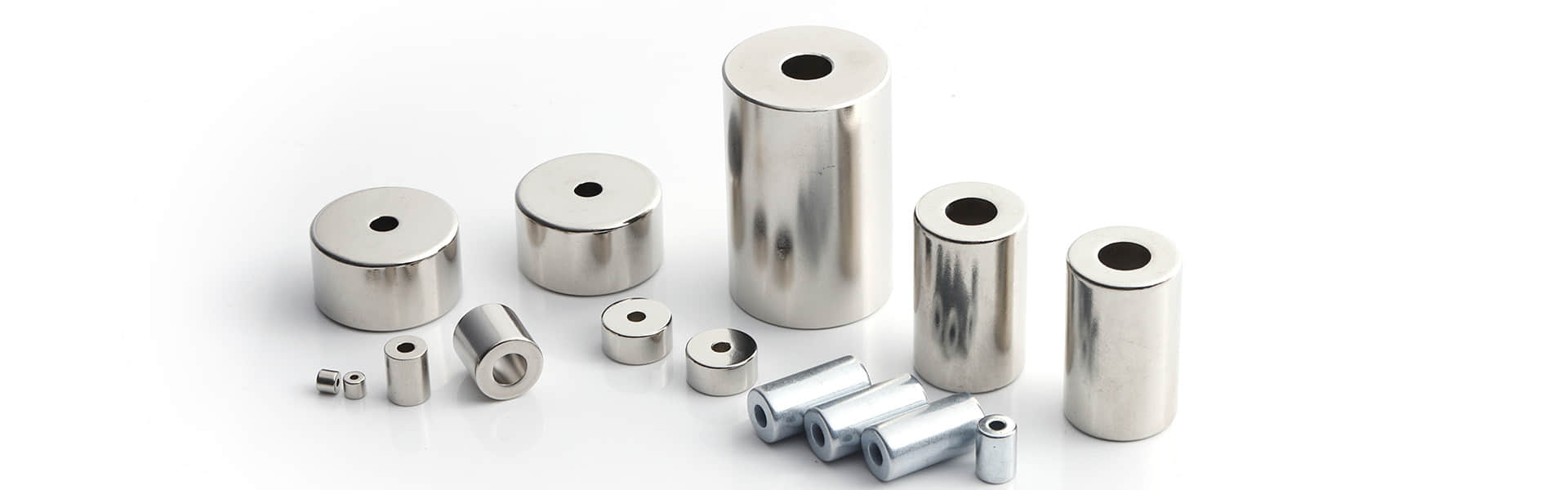
What is a Neodymium Magnet? How Are They Made | XiLaitech
What is a Neodymium Magnet? The Complete Guide to the World‘s Strongest Permanent Magnet
If you are reading this, chances are you are holding, sitting near, or even wearing a product that contains a piece of technology so advanced it was only discovered in the 1980s: the neodymium magnet.
Commonly referred to as NdFeB magnets or Neo magnets, these are the strongest permanent magnets commercially available today. From the silent hum of your electric vehicle to the compact power of your wireless earbuds, neodymium magnets make modern miniaturization possible.
In this guide, we will answer two fundamental questions: What is a neodymium magnet? and How are neodymium magnets made?
What is a Neodymium Magnet?
A neodymium magnet is a permanent magnet made from an alloy of Neodymium (Nd), Iron (Fe), and Boron (B) . This combination forms a tetragonal crystalline structure known as Nd₂Fe₁₄B .
The "Super Strong" Explanation
Why are they so powerful? The strength comes from the specific crystal structure. The Nd₂Fe₁₄B compound has what is called "high uniaxial magnetocrystalline anisotropy." This means the crystals strongly prefer to be magnetized along a specific axis, and it is incredibly difficult to demagnetize them .
- Composition: A typical neodymium magnet consists of approximately 70% Iron, 25% Neodymium, and 5% Boron .
- Power: A small neodymium magnet can hold up to 1,300 times its own weight . By volume, they are about 18 times stronger than standard ferrite (ceramic) magnets .
A Brief History
The neodymium magnet is relatively young. It was developed almost simultaneously in 1982 by General Motors and Sumitomo Special Metals (led by Masato Sagawa) . The driving force was the need for a stronger, more cost-effective alternative to the expensive Samarium Cobalt (SmCo) magnets .
Grades and Operating Temperatures
Neodymium magnets are graded by their strength (Maximum Energy Product, or BHmax). Common grades range from N35 to N52—the higher the number, the stronger the magnet.
- Standard Grades (N35-N52): Operate up to about 80°C (176°F) .
- High-Temperature Grades (SH, UH, EH): With added Dysprosium or Terbium, these can operate from 120°C up to 230°C , though this slightly reduces the raw magnetic strength .
The Two Main Types: Sintered vs. Bonded
While "neodymium magnet" is a blanket term, there are two distinct manufacturing methods that create two different types of magnets:
1. Sintered NdFeB: This is the most common type. It is made using a powder metallurgy process, resulting in a fully dense, metallic block. These offer the highest magnetic performance .
2. Bonded NdFeB: These are made by mixing the magnetic powder with a polymer (like plastic) and pressing or injection molding it. They are weaker magnetically (about half the strength) but allow for complex shapes and are more resistant to corrosion .
---
How Are Neodymium Magnets Made? A Step-by-Step Breakdown
The creation of a neodymium magnet is a fascinating, high-precision industrial process. Because the material is highly reactive and incredibly hard, manufacturing requires specialized equipment and strict environmental controls.
Most of the world’s supply is made via the Sintered process. Here is how it works:
Step 1: The Mix (Raw Materials & Melting)
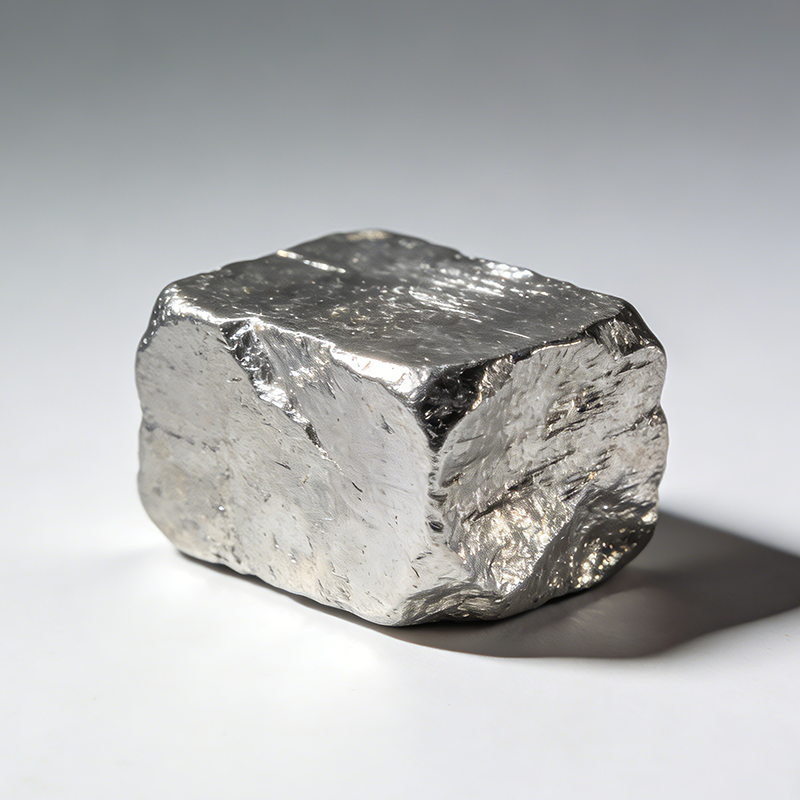
It all starts with the raw materials: Neodymium (or Didymium), Iron, and Boron, often with additions like Dysprosium or Cobalt for specific properties. These elements are weighed with extreme accuracy and placed into a vacuum induction furnace. Under high heat and in an oxygen-free environment, they are melted together to form the NdFeB alloy .
Step 2: Strip Casting
The molten alloy is poured onto a rotating, water-cooled wheel. This rapid cooling (quenching) solidifies the metal into thin, flake-like ribbons or sheets. This process is critical for creating a uniform microstructure, preventing the formation of pure iron grains that weaken the magnet .
Step 3: Hydrogen Decrepitation (HD)
The alloy flakes are placed into a rotating furnace that is flooded with hydrogen. The neodymium absorbs the hydrogen and expands, causing the alloy to fracture and crumble from large flakes into a coarse powder. This is a chemical cracking process .
Step 4: Jet Milling
The coarse powder is then fed into a jet mill. High-pressure nitrogen gas spins the powder around inside a chamber, causing the particles to smash into each other until they are reduced to a fine powder. The target size is usually around 3 to 5 microns (smaller than a grain of flour or a red blood cell) .
Step 5: Pressing & Magnetic Alignment
This is the "magic" step. The fine powder is placed into a mold in a machine that also applies a powerful magnetic field. As the powder is compressed, the magnetic field forces all the microscopic grains to align so their magnetic axes point in the same direction. This alignment is what gives the finished magnet its incredible strength .
Step 6: Sintering
The pressed "green" block is now a solid shape, but it is weak and porous. It is placed in a vacuum furnace and heated to nearly its melting point (about 1000°C to 1100°C ). This causes the powder particles to fuse together into a dense, solid, metallic block .
Step 7: Machining
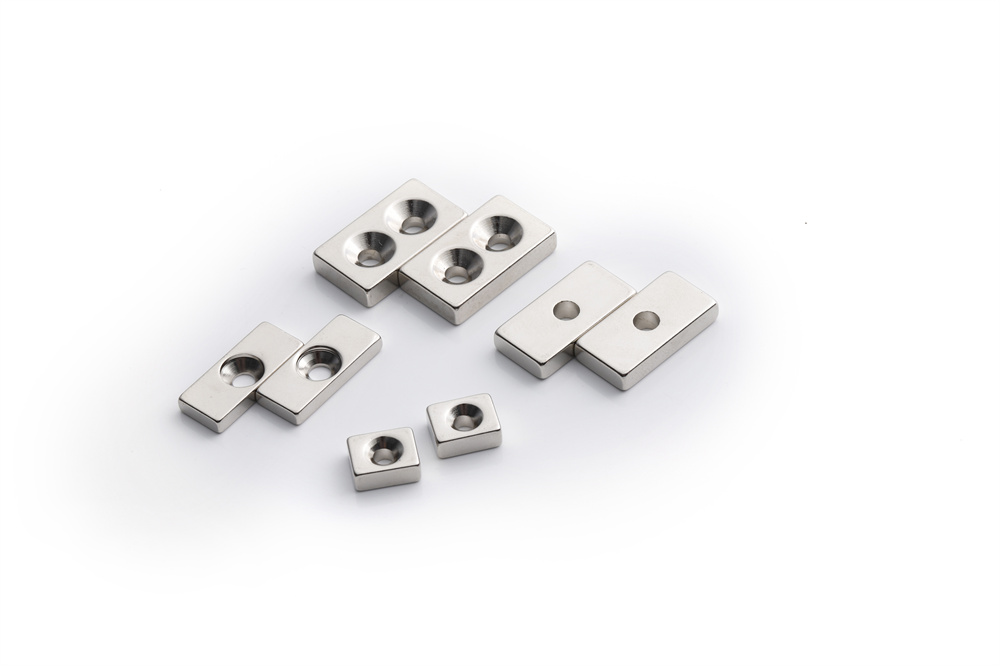
The sintered blocks are incredibly hard and brittle. They cannot be machined with normal metal tools. Instead, manufacturers use diamond-coated grinding wheels and wire EDM (Electrical Discharge Machining) to cut the blocks into specific shapes: blocks, discs, rings, or arcs for motors .
Step 8: Surface Coating
Raw NdFeB is highly susceptible to corrosion (rust). If left uncoated, it can crumble into dust. Therefore, a protective coating is applied. The most common coating is a three-layer Nickel-Copper-Nickel plating. Other options include Zinc, Gold (for aesthetics), or Epoxy resin for high humidity environments .
Step 9: Magnetizing
In its finished state, the magnet is not yet magnetic. To activate it, the parts are placed inside a high-power magnetizing fixture. A massive pulse of electricity generates a magnetic field several times stronger than the magnet's final strength, permanently aligning the magnetic domains and bringing the magnet to life .
Step 10: Final Inspection & Packaging
Every batch is rigorously tested using Helmholtz coils, hysteresis graphs, and pull-testers to ensure the magnetic performance matches the grade (e.g., N42). They are then carefully packed to prevent chipping during shipping .
Applications: Where You’ll Find Them
Because of their strength-to-size ratio, neodymium magnets have revolutionized industries:
- Electronics: Hard disk drives, smartphone speakers, headphones, and haptic motors .
- Green Energy: Generators in wind turbines and the drive motors in hybrid/electric vehicles (like the Toyota Prius) .
- Medical: Magnetic Resonance Imaging (MRI) machines .
- Industrial: Magnetic separators, lifting equipment, and magnetic switches .
Safety and Handling
Due to their immense strength, neodymium magnets require respect:
- Pinching: Larger magnets can fly together and shatter, causing severe pinching or bone breaks.
- Medical Devices: They can interfere with pacemakers and other implanted medical devices .
- Children: If two or more are swallowed, they can attract through intestinal walls, causing life-threatening blockages .
Conclusion
From a laboratory discovery in 1982 to the heart of the green energy revolution, the neodymium magnet is a marvel of modern material science. Understanding what a neodymium magnet is and how neodymium magnets are made reveals just why they are the preferred choice for engineers worldwide when only the strongest magnet will do.
*Looking for high-performance neodymium magnets for your next project? Browse our selection of precision-engineered [N52 magnets](#) or contact our sales team for custom sintering solutions.*