
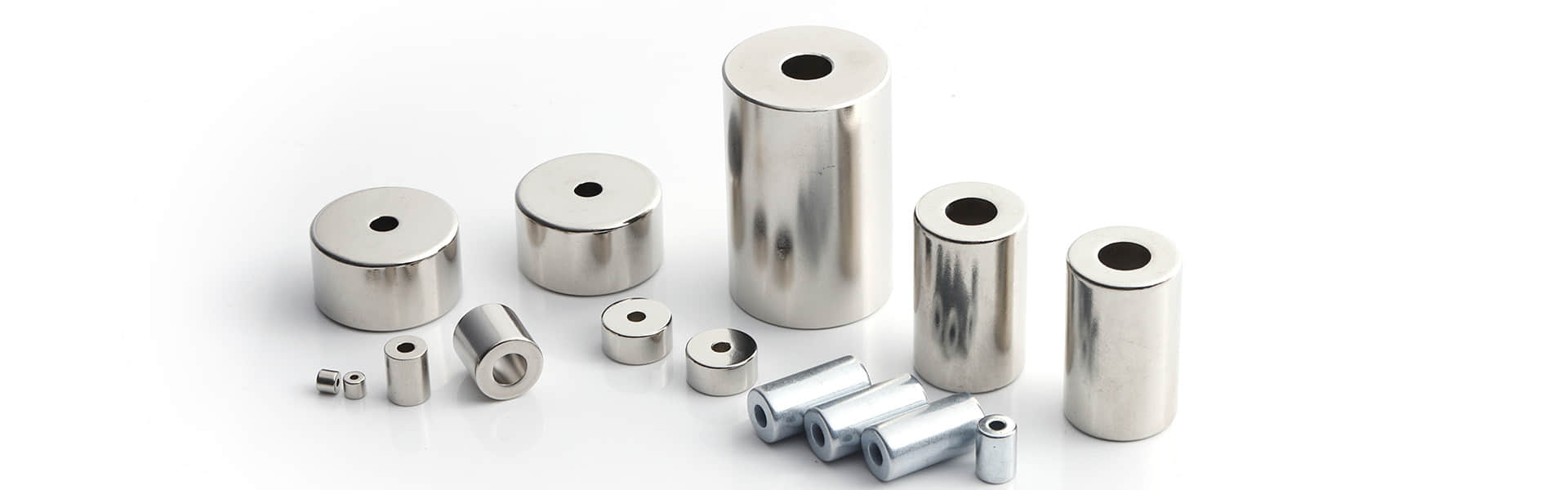
How to Prevent Neodymium Magnets from Rusting (And What to Do If They Do)
Introduction
You just received your neodymium magnets. They're shiny, strong, and perfect for your project. A few weeks later, you notice orange-brown spots. Rust.
Neodymium magnets (NdFeB) contain approximately 65-70% iron by weight. That iron wants to oxidize when exposed to moisture and oxygen. Unlike ferrite or samarium cobalt magnets, neodymium magnets will rust if not properly protected.
The good news: rust is preventable. This guide covers:
Why neodymium magnets rust
How different coatings protect against corrosion
Best practices for storage and handling
What to do if your magnets already show rust
Why Neodymium Magnets Rust
Neodymium magnets are composed of:
Neodymium (Nd) – about 30%
Iron (Fe) – about 65-70%
Boron (B) – about 1-5%
The high iron content makes them susceptible to oxidation. When iron reacts with oxygen and water, it forms iron oxide—rust.
The rusting process:
Moisture contacts the magnet surface
Iron atoms lose electrons (oxidation)
Rust forms, expanding and flaking off
The process continues, eventually destroying the magnet
Accelerating factors:
| Factor | Effect |
|---|---|
| High humidity | Speeds rust formation |
| Salt (marine environments) | Greatly accelerates corrosion |
| Scratches or coating damage | Creates entry points for moisture |
| Condensation (temperature changes) | Provides liquid water |
| Direct water immersion | Rapid rusting without coating |
The result: An uncoated neodymium magnet left in a humid environment can show visible rust within days and become a crumbly powder within months.
Coating Options for Neodymium Magnets
All neodymium magnets intended for use outside of perfectly dry, inert environments need a protective coating. Here are the most common options:
| Coating | Appearance | Corrosion Resistance | Durability | Best For |
|---|---|---|---|---|
| Nickel-Copper-Nickel (Ni-Cu-Ni) | Shiny silver | Good | Excellent | General purpose, most common |
| Epoxy | Black or colored | Excellent | Good | High humidity, saltwater |
| Gold | Gold/Yellow | Very Good | Good | Medical, aesthetic, biocompatible |
| Zinc | Dull gray | Moderate | Moderate | Low-cost applications |
| Passivation (no coating) | Raw metal | Poor | N/A | Only dry, inert environments |
| Parylene | Clear | Excellent | Excellent | Medical, extreme environments |
| Rubber/Plastic overmolding | Custom | Excellent (encapsulated) | Excellent | Consumer products, water immersion |
Nickel-Copper-Nickel (Ni-Cu-Ni) – The Industry Standard
Composition: Three layers – nickel (corrosion resistance), copper (barrier layer), nickel (outer protective layer)
Pros:
Excellent general-purpose corrosion protection
Hard, scratch-resistant surface
Economical (standard coating for most magnets)
Good for indoor and outdoor use (non-marine)
Cons:
Not suitable for prolonged saltwater exposure
Scratches can expose base material
Conductive (not for electrical isolation)
Best for: General industrial, automotive, consumer products, indoor use, outdoor use away from salt.
Expected lifespan in normal conditions: 5–10 years before minor surface rust may appear at scratches.
Epoxy Coating
Composition: Thermosetting polymer applied as liquid or powder, then cured
Pros:
Excellent corrosion resistance, including saltwater
Insulating (non-conductive)
Available in colors (black, red, green, custom)
Seals small scratches better than nickel
Cons:
Softer than nickel – more easily scratched
Can chip if impacted
Slightly thicker (adds 0.1–0.3 mm to dimensions)
More expensive than Ni-Cu-Ni
Best for: Marine environments, outdoor exposed applications, salt spray conditions, applications requiring electrical insulation.
Expected lifespan in marine environment: 5–15 years depending on coating quality and mechanical abuse.
Gold Coating (Ni-Cu-Au)
Composition: Nickel-copper base with gold top layer (typical: 5-10 microns gold)
Pros:
Excellent corrosion resistance
Biocompatible (non-reactive)
Good conductivity for electrical contacts
Premium appearance
Cons:
Expensive
Soft surface (scratches easily)
Usually over nickel-copper base
Best for: Medical devices (implantable or surgical tools), high-end consumer products, applications requiring gold contact surfaces.
Zinc Coating
Composition: Electroplated zinc layer (sometimes with chromate conversion)
Pros:
Low cost
Sacrificial protection (zinc corrodes instead of magnet)
Good for mild environments
Cons:
Poor saltwater resistance
Zinc whiskers can form
Less durable than nickel
Not recommended for permanent outdoor use
Best for: Budget applications, indoor dry environments, short-term use.
Rubber or Plastic Overmolding
Composition: Magnet fully encapsulated in rubber (TPE, silicone) or plastic
Pros:
Complete moisture protection
Adds grip and impact resistance
Can be waterproof for immersion
Custom shapes and colors
Cons:
Adds significant thickness
Higher cost
Reduces magnetic field at surface
Not suitable for tight tolerances
Best for: Consumer products, underwater applications, magnetic mounts, products handled frequently.
Choosing the Right Coating for Your Environment
| Environment | Recommended Coating | Why |
|---|---|---|
| Indoor, climate-controlled | Ni-Cu-Ni (standard) | Sufficient protection, lowest cost |
| Outdoor, covered (no rain) | Ni-Cu-Ni or Epoxy | Ni-Cu-Ni fine; epoxy extra safety |
| Outdoor, direct rain/weather | Epoxy | Superior moisture protection |
| Marine (saltwater splash) | Epoxy or Rubber overmold | Salt is aggressive; Ni-Cu-Ni insufficient |
| Marine (continuous immersion) | Rubber/Plastic overmold | Complete encapsulation required |
| Food processing | Epoxy (FDA-grade) or Stainless steel housing | Corrosion resistance plus food safety |
| Medical (non-implantable) | Epoxy or Ni-Cu-Ni | Both acceptable |
| Medical (implantable) | Gold or Parylene | Biocompatibility required |
| High-humidity factory | Epoxy | Condensation cycles |
Storage Best Practices to Prevent Rust
Even coated magnets can rust if stored improperly. Follow these guidelines:
| Do | Don't |
|---|---|
| Store in low-humidity environment(below 50% RH) | Store in damp basements or outdoors |
| Use desiccant packs (silica gel) in storage containers | Store near sinks, pools, or wet areas |
| Keep magnets separated with non-magnetic spacers | Stack magnets directly on each other (traps moisture) |
| Store in sealed plastic containers | Store in cardboard (absorbs moisture) |
| Apply light oil or corrosion inhibitorfor long-term storage | Leave fingerprints (acidic oils promote corrosion) |
| Inspect periodically for early rust spots | Ignore small rust spots |
Long-term storage (6+ months):
Clean magnets with isopropyl alcohol
Apply light coat of corrosion inhibitor (e.g., Boeshield T-9, WD-40 Specialist Corrosion Inhibitor)
Place in sealed plastic bag with silica gel desiccant
Store in temperature-stable environment (15-25°C / 60-77°F)
Handling Best Practices
Human skin oils are slightly acidic and contain salts. Repeated handling can degrade coatings over time.
Guidelines:
Wear clean, dry gloves (cotton or nitrile) when handling magnets for storage
Clean fingerprints off with isopropyl alcohol if you handle without gloves
Avoid scratching – don't drag magnets across steel surfaces
Inspect coatings before use – if you see damage, consider recoating or replacing
What to Do If Your Magnets Already Show Rust
For Light Surface Rust (Minor spots, no pitting)
Step 1: Assess severity
Light rust: Orange spots, surface-only, magnet still structurally sound
Moderate rust: Spreading rust, coating damaged
Severe rust: Flaking, pitting, magnet crumbling
Step 2: Clean light rust
Wear gloves and safety glasses
Gently clean with isopropyl alcohol and a soft cloth (removes surface rust)
For stubborn spots: Use ultra-fine steel wool (0000 grade) or Scotch-Brite pad – very gently
Wipe clean with alcohol
Inspect coating – is it intact?
Step 3: Protect after cleaning
Apply clear epoxy or nail polish over the cleaned area
Or recoat with spray enamel (mask off areas that need precise dimensions)
For small magnets: Consider dipping in liquid electrical tape or Plasti Dip
Important: Once rust starts, it may continue under the coating. Cleaning and resealing can extend life but not restore original condition.
For Moderate Rust (Coating failed, rust spreading)
Options:
| Option | Feasibility | Result |
|---|---|---|
| Remove coating and recoat | High | Can restore function |
| Electroplate with nickel (professional) | Low (requires equipment) | Like new |
| Replace magnet | Medium | Best result |
DIY recoating (for non-critical applications):
Remove old coating with sandpaper or chemical stripper (acetone)
Clean magnet thoroughly
Apply rust converter (converts iron oxide to inert compound)
Apply epoxy spray paint or enamel (2-3 thin coats)
Cure according to product instructions
Professional recoating: Send to a magnet manufacturer or plating shop. They can strip and replate with Ni-Cu-Ni or epoxy.
Cost vs replace: Professional recoating often costs as much as a new magnet. For small quantities, replacement is usually cheaper.
For Severe Rust (Pitting, structural damage, crumbling)
Do not attempt to save the magnet. The internal structure is compromised. The magnet will continue to degrade and may shatter.
Safe disposal:
Place in sealed plastic bag
Dispose as hazardous waste (if large quantities) or general waste (small magnets are usually acceptable – check local regulations)
Do not incinerate (neodymium magnets produce toxic fumes when burned)
Prevention for next time: Purchase coated magnets appropriate for your environment and store properly.
Signs of Coating Failure to Watch For
| Sign | What It Means | Action |
|---|---|---|
| Blistering or bubbling | Moisture under coating | Replace or recoat soon |
| White powdery residue (nickel coating) | Corrosion under nickel | Replace |
| Black spots under epoxy | Corrosion starting | Monitor; plan replacement |
| Visible orange rust | Coating breached | Clean and seal immediately |
| Flaking coating | Adhesion failure | Replace |
When to Choose Uncoated (Bare) Magnets
Uncoated neodymium magnets are sometimes used in specific applications:
| Application | Why Uncoated Works |
|---|---|
| Inside sealed electronics | No moisture exposure |
| Encapsulated in plastic/rubber | Integral overmolding protects |
| In oil-filled systems | Oil excludes moisture and oxygen |
| Short-term use (weeks) | Not enough time for significant rust |
| Controlled lab environments | Very low humidity |
For most applications, choose coated magnets. The small additional cost is worth the protection.
Comparison of Coating Costs (Relative)
| Coating | Relative Cost (vs uncoated) | Typical ROI |
|---|---|---|
| No coating (bare) | 1.0x | Only for dry, sealed environments |
| Ni-Cu-Ni (standard) | 1.1–1.2x | Best value for 80% of applications |
| Zinc | 1.1–1.15x | Budget indoor use |
| Epoxy | 1.2–1.4x | Marine, outdoor, demanding environments |
| Gold | 2.0–3.0x | Medical, premium applications |
| Rubber overmold | 1.5–2.5x | Consumer products, underwater |
Coating costs vary by quantity and supplier.
Internal Links
Neodymium Magnet Safety: Why Strong Magnets Can Be Dangerous
N35 vs N42 vs N52: Which Grade to Choose
How to Separate Strong Neodymium Magnets Without Injury
Conclusion
Neodymium magnets rust because they contain iron. But rust is preventable:
Choose the right coating – Ni-Cu-Ni for general use, epoxy for marine/outdoor, rubber overmold for immersion
Store properly – Low humidity, desiccant, sealed containers
Handle with care – Clean gloves, avoid scratches
Inspect regularly – Catch rust early
If you discover rust:
Light rust: Clean and reseal
Moderate rust: Recoat or replace
Severe rust: Replace immediately
For custom-coated magnets or advice on the best coating for your specific environment, contact our team – we offer Ni-Cu-Ni, epoxy, gold, and custom overmolding for all magnet sizes.