
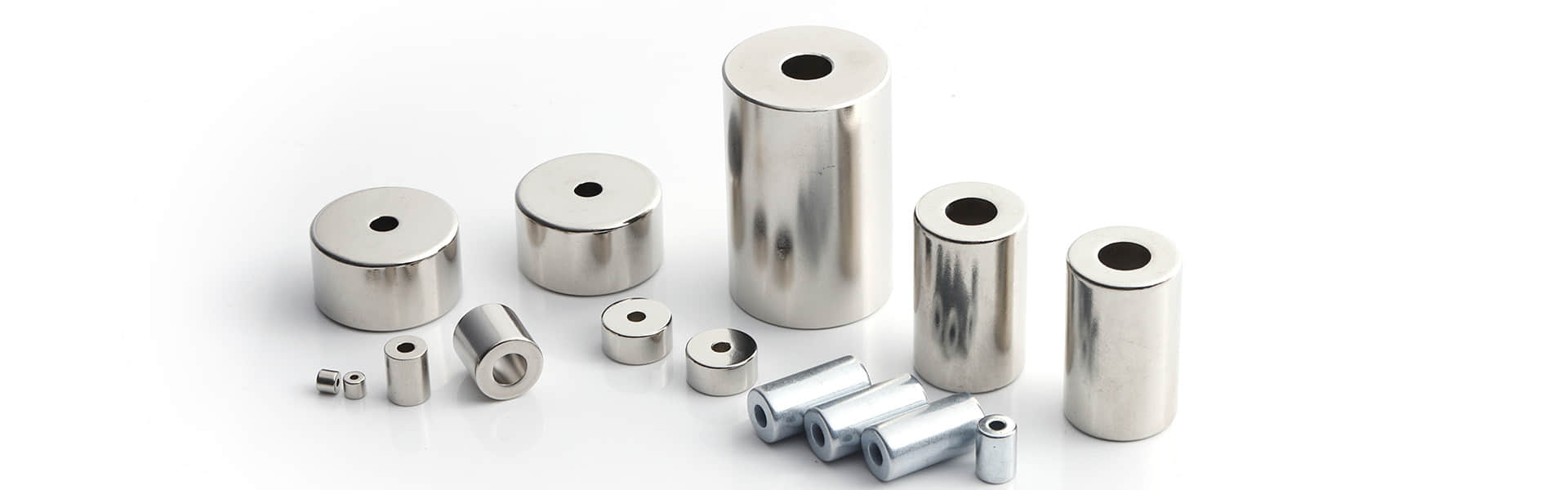
Neodymium Magnets in Permanent Lifting Magnets (Lift Magnets) for Steel Handling
Introduction
In steel fabrication, machine shops, and scrapyards, workers need to lift heavy ferrous items – plates, beams, pipes, molds. Electromagnetic lifters require continuous power and fail during outages. Mechanical clamps need manual adjustment.
Permanent lifting magnets (neodymium-based) provide a safe, energy-free solution. They use high-grade neodymium magnets with a mechanical on/off switch that shunts the magnetic field.
This guide covers:
How permanent lift magnets work
Magnet specifications for lifting applications
Safety factors and working load limits
Real-world applications in manufacturing, recycling, and port operations
Part 1: How a Permanent Lifting Magnet Works
A permanent lift magnet contains neodymium magnets arranged in a circuit with a movable steel shunt or a rotating magnet assembly.
| Component | Function |
|---|---|
| Neodymium magnets (N42SH or N45SH) | Provide magnetic flux for holding |
| Steel pole pieces | Direct flux to the bottom (lifting face) |
| Switch mechanism (mechanical) | Rotates magnet or moves shunt to turn field on/off |
| Handle or actuator | Operator turns to switch |
| Lifting eye / bail | Connects to crane hook |
On position: Flux flows through the steel plate, creating holding force.
Off position: Flux is short-circuited internally (magnets attract to the shunt) – little to no external field.
Advantage over electromagnet: No electricity, no cables, no heat generation, safe if power fails.
Part 2: Magnet Grade and Configuration
2.1 Grade Selection for Lift Magnets
| Grade | Suitability | Reason |
|---|---|---|
| N42SH | Standard choice | Good balance of strength, temp stability (up to 150°C), demagnetization resistance |
| N45SH | Higher performance | 10-15% more holding force than N42SH; more expensive |
| N52 | Not recommended | Too brittle, lower coercivity – risk of demagnetization if overloaded |
Temperature note: Lift magnets can heat up when stored in direct sun or near hot steel. Use SH grade for safety.
2.2 Magnet Configuration
Typical lift magnet uses multiple neodymium blocks arranged in a checkerboard pattern (alternating poles) to maximize holding force.
| Magnet Size (per block) | Quantity per 500kg lifter | Total neodymium weight |
|---|---|---|
| 40x20x10mm N42SH | 48 blocks | ~0.8 kg |
| 50x25x12mm N45SH | 72 blocks | ~1.5 kg |
Part 3: Holding Force and Safety Factors
3.1 Rated Working Load (WLL)
Manufacturers rate lift magnets based on pull force at a specific air gap (usually 0mm, clean steel). Then apply a safety factor.
| Standard | Safety Factor (vs. pull force) | WLL Example (if pull force = 1000kg) |
|---|---|---|
| ASME B30.20 (USA) | 3:1 | 333 kg |
| EN 13155 (Europe) | 3:1 or 4:1 | 250-333 kg |
| Australian standard | 4:1 | 250 kg |
Never exceed WLL. The magnet may still hold, but a sudden shock or edge condition could cause release.
3.2 Real-World Holding Force Factors
| Factor | Effect on Holding Force |
|---|---|
| Steel plate thickness | For plate < 20mm, force reduces dramatically; need magnet rated for thin plate |
| Surface flatness | Bowed or warped steel creates air gap → reduced force |
| Paint / rust | Thin paint OK; thick rust reduces force |
| Edge proximity | Force drops if magnet is near plate edge (< 50mm) |
| Surface cleanliness | Oil, grease, water slightly reduce force |
Thin plate guideline: For 6mm steel plate, a 500kg-rated magnet may only hold 150-200kg effectively.
Part 4: Types of Permanent Lift Magnets
| Type | Best For | Typical WLL Range | Advantages |
|---|---|---|---|
| Rectangular (single pole) | Flat plates, long bars | 100 – 2,000 kg | Most common, good for flat surfaces |
| Circular (rotating magnet) | Scrap, irregular shapes, round bars | 200 – 1,000 kg | Multi-directional field |
| Thin plate magnet | Sheets 5-12mm | 50 – 300 kg | Many small poles, strong on thin material |
| Battery-backed (semi-permanent) | Critical lifts (e.g., mold handling) | 500 – 5,000 kg | Mechanical lock + backup |
Part 5: Real-World Case Study – Steel Service Center
Location: Ohio, USA. A steel distributor cuts 20mm thick carbon steel plates into rectangles for customers.
Problem: Using slings and hooks to move plates from plasma table to pallet. Slow (each plate needs multiple sling adjustments), and plate corners were damaged.
Solution: 1,000kg permanent neodymium lift magnet with 3:1 safety factor.
Specifications:
Magnetic grade: N42SH
Pole configuration: Rectangular, 8 poles
Pull force: 3,000 kg (WLL 1,000 kg)
Weight: 45 kg (magnet only)
Switch: Manual lever with lock
Operation:
Crane lowers magnet onto plate.
Operator turns lever to "on".
Crane lifts and moves plate.
Operator turns lever to "off" – plate releases.
Results:
Handling time per plate reduced from 2 minutes to 30 seconds.
Zero plate edge damage.
No electricity needed – magnet is portable.
ROI: 4 months.
Cost: Magnet $2,800. Compared to electromagnet system with cables and controller ($8,000+).
Part 6: Case Study – Scrap Metal Recycling Yard
Location: Texas scrap yard handling mixed ferrous scrap (cars, beams, shredded material).
Problem: Electromagnetic crane attachment requires generator and heavy cable – limits mobility and has high maintenance (coil burnout, cable replacement).
Solution: Large neodymium permanent lift magnet array (2,000kg WLL) mounted on excavator.
Design:
Magnet type: Circular rotating magnet (heavy-duty)
WLL: 2,000 kg (pull force 6,000 kg, 3:1 safety factor)
Neodymium grade: N45SH
Weight: 180 kg
Switch: Hydraulic-assisted (lever effort too high for manual)
Challenges overcome:
Heat: Texas summer heat + sun on magnet body → internal temp up to 70°C. N45SH handles.
Demagnetization from shock: Dropping scrap causes high shock loads. The circular design with rotating magnets inside steel housing protects against demagnetization.
Results:
No generator needed – magnet attached to any hydraulic excavator.
Less downtime (no coil burnouts).
Lifting efficiency for non-flat scrap (cars, tangled metal) improved due to rotating magnet design.
Magnet paid for itself in 9 months.
Part 7: Safety and Operational Guidelines
| Operation | Correct Practice |
|---|---|
| Before each use | Check magnet for damage (cracks, loose switch). Clean bottom surface. |
| Lifting | Lower magnet gently onto steel. Engage switch fully. Lift slowly – check that load is attached. |
| Moving | Avoid swinging load; do not bump into other steel. |
| Releasing | Set load down on non-ferrous surface (wood or rubber) or on steel with care. Turn switch off. |
| Storage | Store in "off" position on a non-ferrous stand (wood or plastic). Do not store on steel (may be difficult to remove). |
Do NOT:
Exceed WLL.
Use on curved surfaces without special attachment.
Weld or grind near magnet (sparks can damage coating).
Drop magnet or hammer on it.
Use to lift people.
Part 8: Inspection and Maintenance
| Interval | Task |
|---|---|
| Daily visual | Check for cracks, missing bolts, smooth switch operation |
| Monthly | Measure pull force test (use spring scale or calibrated pull test) |
| Annual | Send to certified service center for full inspection (if in regulated lifting) |
Signs of demagnetization:
Reduced holding force (test at same steel thickness)
Switch feels "loose" (internal magnets may have shifted)
Service life: A well-maintained neodymium lift magnet can last 15-25 years with minimal field loss (< 10%). After that, remagnetization is possible (send to specialist).
Part 9: Cost Comparison (500kg WLL permanent lift magnet vs. alternatives)
| Device | Initial Cost | Operating Cost | Maintenance | Lifespan |
|---|---|---|---|---|
| Neodymium permanent magnet | $2,000-3,500 | $0 (no power) | Low (inspection only) | 15-25 yrs |
| Electromagnet (with controller/cable) | $5,000-8,000 | Power consumption | High (coils, cables) | 5-10 yrs |
| Mechanical clamp (manual) | $500-1,500 | $0 | Moderate (pivot wear) | 10 yrs |
| Suction cup (vacuum) | $1,500-3,000 | $0 (manual) | High (seals) | 3-5 yrs |
For frequent, repetitive lifts: Neodymium permanent magnet has the lowest total cost of ownership.
Conclusion
Neodymium permanent lift magnets are ideal for:
Steel plate handling (fabrication, shipyards, service centers)
Scrap metal lifting (recycling yards, demolition)
Mold and die handling (machine shops)
Warehouse steel storage (lifting beams, bars)
Selection checklist:
| Parameter | Requirement |
|---|---|
| Rated WLL | Include safety factor (3:1 or 4:1 as per local standard) |
| Plate thickness | For thin (<12mm), choose magnet designed for thin plate |
| Environment | For outdoor/hot, choose SH or UH grade |
| Switching | Manual for small magnets (<500kg); hydraulic/assisted for larger |
| Certifications | Request ASME, CE, or EN 13155 compliance |
XiLaitech manufactures custom neodymium magnets for permanent lift magnets. We supply N42SH and N45SH blocks with precise tolerances and optional epoxy coating for corrosion resistance.