
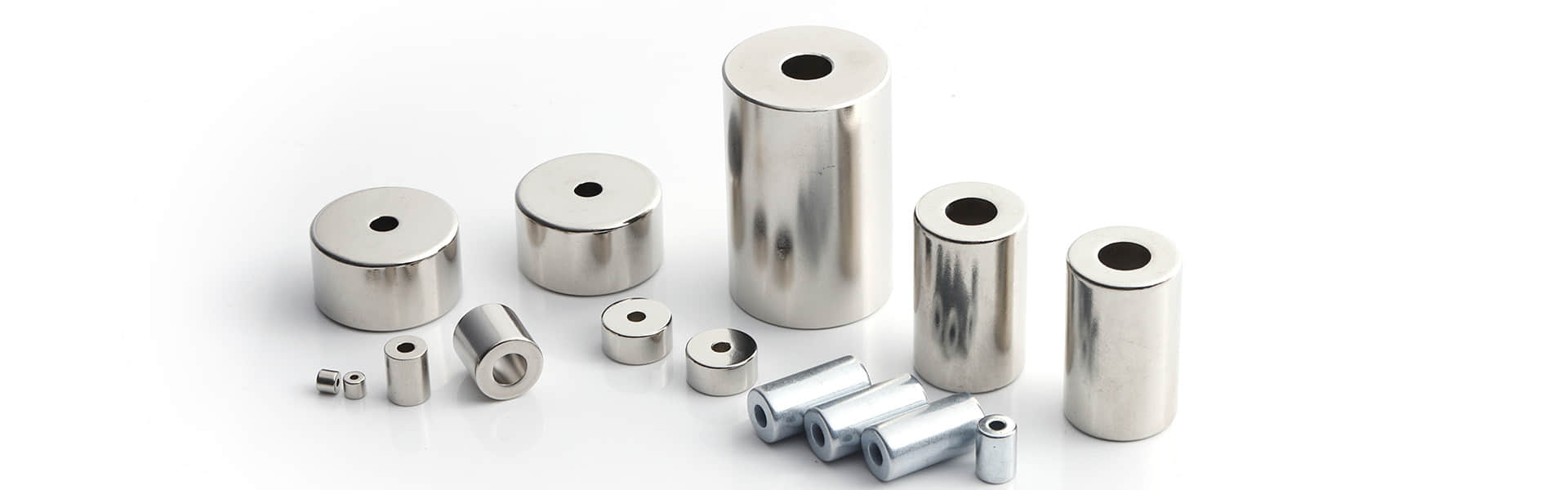
Neodymium Magnets in Electric Vehicles: Why They're Critical for EV Motors
Introduction
Every time you see an electric vehicle (EV) accelerate smoothly or achieve a long driving range, you're witnessing the power of neodymium magnets at work. These small but incredibly strong magnets are a critical component in the most common type of EV motor: the permanent magnet synchronous motor (PMSM).
Without neodymium magnets, most modern EVs would be heavier, less efficient, and have shorter range. This guide explains:
How neodymium magnets are used in EV motors
Why manufacturers choose permanent magnet motors over other types
The challenges and future of rare earth magnets in the EV industry
How EV Motors Work: A Quick Primer
Most electric vehicles use one of three motor types:
| Motor Type | How It Works | Magnet Use | Common EVs |
|---|---|---|---|
| Permanent magnet synchronous motor (PMSM) | Rotor contains permanent magnets; stator creates rotating magnetic field | Neodymium magnets | Tesla Model 3/Y (rear), Nissan Leaf, BMW i3, Ford Mustang Mach-E |
| Induction motor | Rotor has no magnets; magnetic field induced by stator | No magnets | Tesla Model S/X (older versions), some Audi e-tron |
| Wound-rotor synchronous motor | Rotor uses electromagnets (copper windings) | No magnets | Some commercial EVs, hybrids |
Why PMSM dominates: Permanent magnet motors are more efficient(typically 95–97% vs 90–93% for induction), smaller, and lighter for the same power output. The key enabling technology? High-strength neodymium magnets.
Where Neodymium Magnets Are Located in an EV Motor
In a typical PMSM, the rotor (the rotating part) contains neodymium magnets arranged in a specific pattern. The stator (stationary part) contains copper windings.
Magnet placement patterns (for engineers):
| Pattern | Description | Advantage |
|---|---|---|
| Surface-mounted | Magnets attached to rotor surface | Simple construction, lower cost |
| Interior (IPM) | Magnets embedded inside rotor | Better high-speed performance, reluctance torque |
| V-shaped | Magnets arranged in a "V" pattern | Improved torque density, used in many EVs |
Number of magnets: A typical EV motor contains 40 to 120 individual neodymium magnets, depending on motor size and design. For example, the Tesla Model 3 rear motor uses approximately 60 embedded neodymium magnets.
Why Neodymium? Why Not Ferrite or Samarium Cobalt?
| Property | Neodymium (N42SH) | Ferrite | Samarium Cobalt |
|---|---|---|---|
| Maximum energy product | 40+ MGOe | 3–4 MGOe | 20–25 MGOe |
| Remanence (Br) | 12.8–13.2 kGs | 3.5–4.0 kGs | 10–11 kGs |
| Coercivity (Hc) | High | Medium | Very high |
| Max operating temp | 150°C (SH grade) | 250°C | 300°C+ |
| Cost | High | Low | Very high |
Neodymium wins because:
It's 2–3 times stronger than samarium cobalt for the same size
It's 5–10 times stronger than ferrite
High-temperature grades (SH, UH, EH) can operate in hot EV motors (up to 180–220°C)
Cost is higher than ferrite but acceptable for EV applications
The trade-off: Neodymium magnets lose strength at high temperatures. That's why EV motors have sophisticated cooling systems (oil or water cooling) to keep magnets below 150–180°C.
How Much Neodymium Is in an EV?
The amount varies by vehicle:
| EV Model | Motor Type | Estimated Neodymium per Vehicle |
|---|---|---|
| Tesla Model 3 (rear motor) | PMSM | 0.5–1.0 kg |
| Tesla Model Y (rear motor) | PMSM | 0.5–1.0 kg |
| Nissan Leaf | PMSM | 0.6–1.2 kg |
| BMW i3 | PMSM | 0.4–0.8 kg |
| Ford Mustang Mach-E | PMSM (front and rear) | 1.0–2.0 kg |
Total market: In 2024, global EV production reached approximately 14 million vehicles. At an average of 0.8 kg of neodymium per EV, that's over 11,000 metric tons of neodymium annually—and growing rapidly.
Performance Benefits of Neodymium Magnets in EVs
1. Higher torque density
Neodymium magnets allow motors to produce more torque per kilogram of motor weight. This means:
Smaller, lighter motors
More interior space for passengers and cargo
Lower vehicle weight = longer range
2. Better efficiency across driving cycles
Permanent magnet motors have no electrical losses in the rotor (unlike induction motors, which induce current in the rotor). This improves efficiency by 3–5 percentage points—significant for range.
3. Regenerative braking compatibility
PMSMs excel at regenerative braking, converting kinetic energy back to electricity. Strong neodymium magnets enable efficient energy capture.
4. Smooth, quiet operation
Permanent magnet motors run with less vibration and noise than induction motors—a key luxury feature in premium EVs.
Thermal Challenges: Keeping Magnets Cool
Neodymium magnets have a negative temperature coefficient—they lose about 0.11% of their strength per degree Celsius above room temperature. At 150°C, an N42SH magnet may have lost 30–40% of its room-temperature strength.
How EV manufacturers address this:
| Cooling Method | How It Works | Used In |
|---|---|---|
| Water-glycol cooling | Coolant circulates through motor housing | Most EVs (Tesla, Nissan, BMW) |
| Oil spray cooling | Oil sprayed directly onto stator windings and rotor | High-performance EVs (Porsche Taycan) |
| Combined cooling | Both water jacket and oil spray | Premium EVs |
High-temperature magnet grades:
| Grade | Max Operating Temp | Used In |
|---|---|---|
| N42SH | 150°C | Standard EVs |
| N42UH | 180°C | High-performance EVs |
| N42EH | 200°C | Racing EVs, extreme duty |
| N42AH | 220°C | Experimental |
The Supply Chain Challenge: Rare Earth Dependence
Neodymium is a rare earth element, and production is heavily concentrated:
| Country | Share of Neodymium Production (approx.) |
|---|---|
| China | 85–90% |
| Australia | 5–8% |
| United States | 3–5% |
| Other | <2% |
Risks:
Supply chain vulnerability (geopolitical)
Price volatility (neodymium prices can swing 2–3x in a year)
Environmental concerns about rare earth mining
Industry responses:
Reducing neodymium per motor – Using more efficient designs, adding dysprosium to maintain performance with less neodymium
Recycling EV magnets – End-of-life vehicle programs to recover rare earths
Developing magnet-free motors – Tesla's induction motor (older S/X) and switched reluctance motors (emerging)
Alternative magnet types – Ferrite with higher efficiency designs (lower performance)
Tesla's pivot: In 2023, Tesla announced it would reduce neodymium usage by 25% in next-generation drive units, shifting to a combination of permanent magnet and induction motors.
Future Trends: Will Neodymium Always Dominate EV Motors?
| Trend | Impact on Neodymium Demand |
|---|---|
| Global EV adoption accelerating | ↑ Increases demand |
| More efficient motor designs | ↓ Reduces neodymium per motor |
| Recycling programs scaling up | ↓ Reduces virgin neodymium demand |
| Magnet-free motor R&D | ↓ Potential long-term reduction |
| New rare earth mines opening | ↔ Stabilizes supply, not demand |
Consensus forecast: Neodymium demand for EVs will grow significantly through 2030, but at a slower rate than EV unit growth, thanks to efficiency improvements and recycling.
Neodymium Magnet Specifications for EV Motors
If you're sourcing magnets for EV or automotive applications, typical specifications include:
| Parameter | Typical Requirement |
|---|---|
| Grade | N42SH, N45SH, N42UH, N45UH |
| Coating | Epoxy (for corrosion resistance) or Ni-Cu-Ni (for cost) |
| Operating temperature | -40°C to 150°C (SH) or 180°C (UH) |
| Coercivity (Hcj) | ≥ 20 kOe for SH, ≥ 25 kOe for UH |
| Tolerances | ±0.05 mm on critical dimensions |
| Testing | 100% flux testing, thermal aging |
Quality requirements for automotive: EV magnets must pass rigorous testing:
Thermal shock (cycling from -40°C to 150°C)
Humidity exposure (85°C / 85% RH for 1,000 hours)
Salt spray (for corrosion resistance)
Vibration testing (simulating road conditions)
Internal Links
N35 vs N42 vs N52: Which Grade to Choose
How to Calculate the Pull Force You Need
Neodymium vs Ferrite Magnets: Which Is Right for You?
Conclusion
Neodymium magnets are the unsung heroes of the EV revolution. They enable the high efficiency, compact size, and long range that make electric vehicles practical and desirable.
While supply chain concerns and alternative motor designs are emerging, neodymium permanent magnet motors will likely remain the dominant technology for EVs through at least 2030. For engineers, understanding magnet grades, thermal management, and quality requirements is essential to designing reliable EV drive units.
Need high-temperature neodymium magnets for automotive applications? Contact our engineering team – we supply N42SH, N45SH, and N42UH grades with full automotive-grade testing and documentation.