
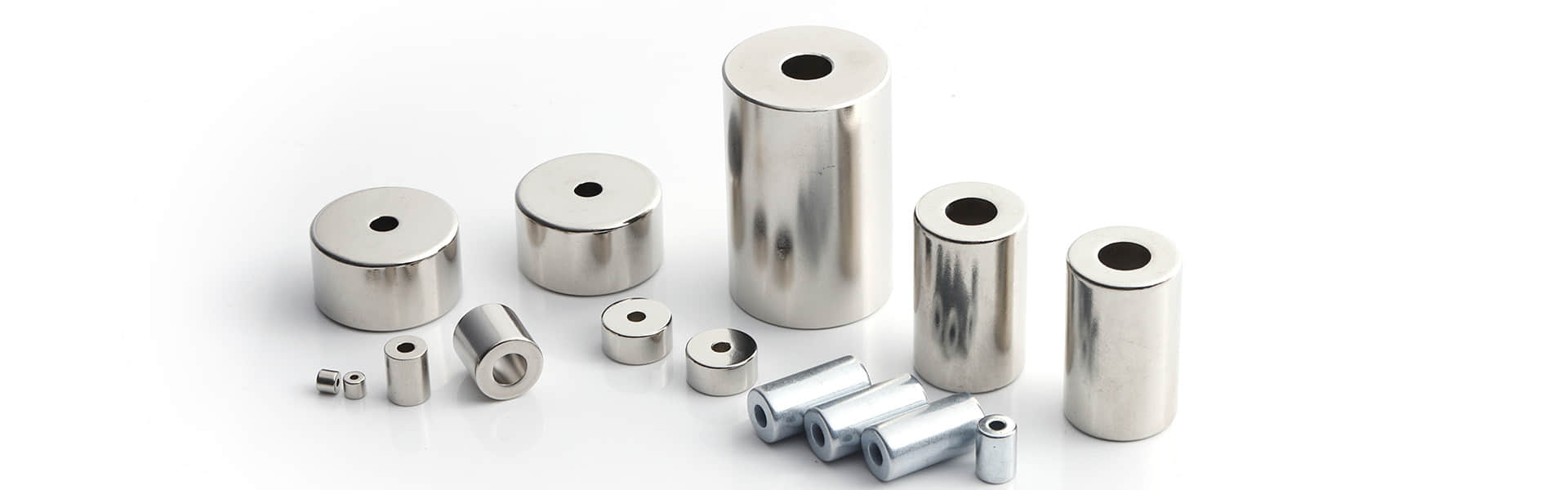
Neodymium Magnets in High-End Audio: Speakers, Headphones, and Acoustic Excellence
Introduction
When you listen to high-quality audio—whether through a pair of premium headphones, a studio monitor, or a concert sound system—you are experiencing the power of neodymium magnets at work.
In any dynamic loudspeaker, the magnet is the engine. It creates the magnetic field that interacts with the voice coil to move the diaphragm and produce sound. The strength, precision, and consistency of that magnetic field directly determine audio quality—clarity, detail, dynamics, and efficiency.
Neodymium Iron Boron (NdFeB) magnets have revolutionized the audio industry. Compared to traditional ferrite (ceramic) magnets, neodymium offers:
5-10 times the magnetic strength for the same volume
Much smaller driver size for the same output
Lighter weight – critical for portable and professional audio
Better high-frequency response due to lower moving mass
This guide covers how neodymium magnets are used in speakers, headphones, and professional audio, including driver design, magnet selection, and real-world applications.
Part 1: How a Dynamic Speaker Works
1.1 The Basic Principle
A dynamic loudspeaker converts electrical energy into acoustic energy (sound) through electromagnetic interaction.
| Component | Material / Function |
|---|---|
| Magnet | Neodymium or ferrite – creates a static magnetic field |
| Voice coil | Copper wire wound on a former – carries the audio signal |
| Diaphragm / cone | Paper, plastic, or metal – moves air to create sound |
| Suspension (spider + surround) | Flexible material – centers the voice coil and allows cone movement |
How it works:
Audio signal (alternating current) flows through the voice coil
The coil sits in the magnetic field of the neodymium magnet
The varying current creates a varying magnetic force on the coil
The coil moves back and forth, driving the diaphragm
The diaphragm pushes air, creating sound waves
The strength and uniformity of the magnetic field directly affect:
Sensitivity – how much sound output per watt of input
Distortion – non-linearities in the magnetic field cause harmonic distortion
Power handling – ability to dissipate heat and handle high power
Frequency response – accuracy across the audio spectrum
1.2 Magnet Placement in a Driver
| Configuration | Description | Typical Use |
|---|---|---|
| External magnet (overhung) | Magnet sits behind the voice coil | Most common in woofers and full-range speakers |
| Internal magnet (underhung) | Magnet sits inside the voice coil | High-excursion subwoofers |
| Neodymium ring magnet | Ring-shaped magnet with coil inside | Compact drivers, headphones |
| Dual magnet | Two magnets on either side of the coil | High-end studio monitors |
The trend in premium audio is toward neodymium ring magnets – they provide a highly symmetrical magnetic field, reducing distortion and improving clarity.
Part 2: Neodymium vs. Ferrite in Audio
| Factor | Neodymium (NdFeB) | Ferrite (Ceramic) |
|---|---|---|
| Magnetic strength | Very high (N42-N52) | Low (ferrite) |
| Size for same output | Small | Large (3-5x larger) |
| Weight | Light | Heavy |
| Cost | Higher | Lower |
| Temperature stability | Good (SH grade for high power) | Excellent |
| Sound quality potential | Excellent (lower distortion) | Good |
| Typical applications | High-end, portable, pro audio | Budget speakers, large woofers |
The key trade-off: Neodymium allows much smaller, lighter speakers with comparable or better output. This is why premium headphones, in-ear monitors, and high-end car audio systems use neodymium almost exclusively.
For woofers and subwoofers: Ferrite is still common in large, budget-conscious designs because the magnet weight is less of a concern. However, high-end subwoofers increasingly use neodymium for better control and lower distortion.
Part 3: Magnet Grades for Audio Applications
| Grade | Suitability for Audio | Why |
|---|---|---|
| N35 | Entry-level, portable speakers | Cost-effective, adequate strength |
| N42 | Standard for most audio | Good strength-to-cost balance |
| N45 | High-end speakers, studio monitors | Higher sensitivity, better dynamics |
| N48 | Premium headphones, pro audio | Maximum output in minimal space |
| N52 | Ultra-compact designs | Highest strength, but more expensive and brittle |
Temperature consideration: High-power speakers (PA systems, subwoofers) generate significant heat. For these, specify N42SH or N45SH – the SH grade maintains magnetic strength at higher temperatures (up to 150°C).
3.1 Magnet Shapes for Audio
| Shape | Application | Advantages |
|---|---|---|
| Ring (annular) | Headphones, tweeters, mid-range | Symmetrical field, low distortion |
| Disc | Small full-range drivers | Simple, cost-effective |
| Segment (arc) | Large woofers | Allows larger diameter with less material |
| Custom (bonded) | Micro-speakers, hearing aids | Complex shapes, tight tolerances |
Ring magnets are preferred for high-end audio because they create a more symmetrical magnetic field around the voice coil, reducing even-order harmonic distortion.
Part 4: Neodymium in Headphones and In-Ear Monitors
4.1 Why Headphones Use Neodymium
Headphones must be lightweight, comfortable, and capable of producing high-quality sound from low-power sources (phones, DACs, amplifiers). Neodymium magnets enable all of these:
| Requirement | How Neodymium Helps |
|---|---|
| Lightweight | Small magnet = light driver = comfortable headphone |
| High sensitivity | Strong magnet = more output per milliwatt = works with phones |
| Low distortion | Uniform field = accurate sound reproduction |
| Compact size | Fits in small earcups or in-ear shells |
Typical headphone driver:
Magnet: N42 or N45 ring magnet, 10-20mm diameter
Voice coil: Copper or copper-clad aluminum
Diaphragm: PET, Mylar, or bio-cellulose
4.2 TWS Earbuds and Bluetooth Headphones
True Wireless Stereo (TWS) earbuds are an extreme example of neodymium's advantage. The entire driver must fit in a tiny housing, yet produce good bass and clear treble.
TWS driver magnet:
Grade: N48 or N52 (maximum strength in minimum space)
Shape: Tiny ring or disc, typically 6-10mm diameter
Weight: Just a few grams
Additional neodymium use in TWS: The charging case uses small neodymium magnets for the magnetic snap closure and to hold the earbuds securely in place during charging.
4.3 Studio Monitor Headphones
Professional studio headphones demand the highest accuracy. Neodymium drivers in studio headphones provide:
Flat frequency response – accurate monitoring for mixing and mastering
Low distortion – critical for hearing details in recordings
High SPL capability – handling loud transients without compression
Part 5: Neodymium in Professional Sound Reinforcement
5.1 PA Systems and Line Arrays
Large concert sound systems use neodymium magnets extensively – but for a different reason than headphones. In PA systems, weight reduction is critical.
| Traditional (Ferrite) | Neodymium PA Driver |
|---|---|
| Heavy magnet (5-10 kg per driver) | Light magnet (1-2 kg per driver) |
| Heavy speaker cabinet | Much lighter cabinet |
| Requires more rigging | Easier to fly (suspend) |
| Higher shipping cost | Lower logistics cost |
A typical line array with 12-24 drivers per cabinet would be impossibly heavy with ferrite magnets. Neodymium makes modern concert sound systems practical.
Example: The Celestion CNX0820 is an 8-inch neodymium coaxial driver that delivers high-output, high-fidelity sound from a lightweight, compact footprint.
5.2 Compression Drivers (High-Frequency)
High-frequency compression drivers for PA systems use neodymium magnets almost exclusively.
| Feature | Benefit |
|---|---|
| High flux density | Efficient high-frequency output |
| Compact size | Fits in tight horn throats |
| Lightweight | Reduces overall cabinet weight |
| Low distortion | Clean, articulate high frequencies |
Industry example: The Eighteen Sound ND3T is a 1.4-inch neodymium high-frequency compression driver designed for high-level sound systems, with an ultra-compact 109mm overall diameter.
Part 6: Neodymium in Home and Automotive Audio
6.1 High-End Home Speakers
Premium home audio speakers increasingly use neodymium magnets, especially in:
Bookshelf speakers – where cabinet size matters
Center channel speakers – where magnetic shielding is important
Subwoofers – for better control and lower distortion
Magnet specification for home audio:
Grade: N42 or N45 (SH for high-power subwoofers)
Shape: Ring or disc, depending on driver design
Coating: Ni-Cu-Ni (standard)
6.2 Automotive Audio
Car audio is a demanding environment:
Temperature extremes – from freezing to 70°C inside a parked car
Vibration – constant road vibration
Limited space – door panels, dashboards, and rear decks
Neodymium magnets are ideal because they are:
Compact – fit in thin door panels
Powerful – deliver high output from small drivers
Temperature-stable – SH grade handles heat
Automotive magnet spec:
Grade: N42SH or N45SH (for temperature stability)
Coating: Epoxy (for moisture resistance in doors)
Part 7: Design Considerations for Audio Magnets
7.1 Magnetic Field Symmetry
The #1 design priority for audio magnets is field symmetry. An asymmetrical field causes:
Even-order harmonic distortion (sounds "warm" but inaccurate)
Reduced power handling (voice coil not centered)
Inconsistent frequency response
How to achieve symmetry:
Use ring magnets (symmetrical by nature)
Use matched magnet pairs (push-pull configuration)
Precision grinding of magnet surfaces (±0.05mm tolerance)
7.2 Demagnetization Risk
Audio drivers can experience demagnetization from:
Overheating – voice coil heat conducts to the magnet
High current spikes – sudden peaks in audio signal
Physical shock – dropping the speaker
Prevention:
Use SH grade for high-power applications (150°C rating)
Design adequate voice coil ventilation
Include thermal protection in active speakers
7.3 Magnetic Shielding
In home theater and studio applications, speakers must not interfere with:
CRT televisions (less common now)
Magnetic storage media (hard drives, tape)
Medical devices (pacemakers)
Shielding methods:
Buckling magnet – a second magnet cancels the stray field
Steel cup – encloses the magnet, directing flux to the voice coil
Mu-metal shield – high-permeability alloy for sensitive applications
Part 8: Real-World Case Study – High-End Headphone Driver
Project: A premium headphone manufacturer wanted to develop a new flagship open-back headphone with ultra-low distortion and exceptional clarity.
Challenge: The driver needed to produce deep bass, clear mids, and extended treble – all in a lightweight package for comfort during long listening sessions.
Solution: Custom neodymium ring magnet driver.
Specifications:
Magnet: N45 ring, 30mm outer diameter, 15mm inner diameter
Grade: N45 (for high sensitivity)
Coating: Ni-Cu-Ni
Voice coil: Copper-clad aluminum (lightweight)
Diaphragm: 40mm bio-cellulose
Results:
Sensitivity: 102 dB/mW (excellent for phone compatibility)
Frequency response: 5 Hz – 40 kHz
Total harmonic distortion: < 0.05% at 100 dB SPL
Weight: 260 grams (lightweight for open-back)
Manufacturer comment: "The neodymium ring magnet provides the most symmetrical magnetic field we've ever measured. The distortion numbers are class-leading."
Part 9: Procurement Checklist for Audio Magnets
| Parameter | Requirement |
|---|---|
| Grade | N42 or N45 standard; N42SH for high-power |
| Shape | Ring preferred for low distortion; disc for simpler designs |
| Tolerance | ±0.05 mm on critical dimensions |
| Coating | Ni-Cu-Ni standard; epoxy for automotive/moisture |
| Magnetization | Axial (through thickness) for most drivers |
| Flux test | 100% testing, tolerance ±5% |
| Temperature rating | Specify SH if driver dissipates > 50W |
Typical lead time for custom audio magnets: 3-5 weeks for ring magnets (including magnetization fixture).
Conclusion
Neodymium magnets have transformed audio technology. From the tiny drivers in TWS earbuds to massive concert sound systems, NdFeB enables better sound in smaller, lighter packages.
Key takeaways for audio engineers and buyers:
| Factor | Recommendation |
|---|---|
| Grade | N42 or N45 for most; N45SH for high-power |
| Shape | Ring magnet for lowest distortion |
| Tolerance | Tight tolerances (±0.05mm) for consistent performance |
| Temperature | Consider SH grade for high-power or automotive |
| Testing | 100% flux test; matched pairs for stereo applications |
The future: As audio devices continue to shrink (truly wireless earbuds, hearables, smart glasses), the demand for high-performance neodymium magnets in ever-smaller packages will only grow.
XiLaitech supplies custom neodymium magnets for audio applications. We offer ring magnets, disc magnets, and bonded magnets with tight tolerances and 100% flux testing. Contact us for audio-grade magnet specifications.